XLR Jack Explained: What the Cannon Connector Does
The XLR jack is a balanced input that connects a mic to a preamp or mixer. Learn its history, pin layout and uses, from phantom power to combo jacks.

Have you ever heard the term XLR jack? If not, read on. As we know, audio cables are essential in audio work such as recording, music and live performance. An audio cable connects two audio devices, for example carrying an audio signal from a CD player to an amplifier.
Ideally, an audio cable carries electrical waves with a stable signal charge to the connected components. Audio cable connectors come in many types, from RCA, MIDI, TRS, TS, BNC, USB and FireWire to XLR. One of the most commonly used is the XLR connector.
So what exactly is an XLR connector?
What Is an XLR Connector?

Source: https://www.goshen.co.id/
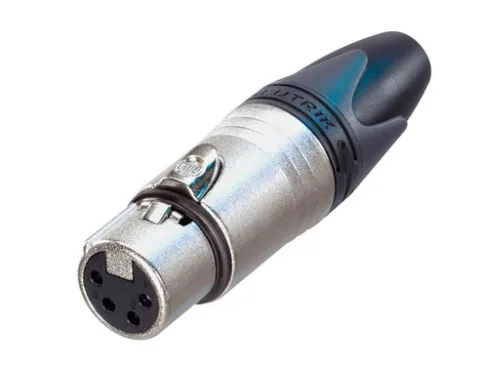
The XLR connector is a balanced input that is often used to connect a mic to a mic preamp, and as the mic socket on a mixer. That is why XLR cables are often called microphone cables. This connector is also common on professional audio and video equipment, and not rarely on stage gear. It is round, with three to seven pins inside.
History of the XLR Connector
The XLR connector was first invented by James H. Cannon, founder of Cannon Electric in Los Angeles, California, in 1950. That is why it is also often called the Cannon connector or Cannon plug.
Uses of the XLR Connector
The XLR connector has a three-pin configuration that does the same job as a balanced 1/4" TRS cable, even though it looks very different. Two pins carry the signal in a particular way that helps cancel out noise. The remaining pin is the ground, which serves as the voltage reference.
This connector is considered good because it suppresses unwanted signals that would otherwise ride along with the audio, and it is fairly cheap. An XLR jack works with XLR inputs as well as combo inputs, commonly called combo jacks, which are now found on almost every model of audio equipment. An XLR / 1/4" combo input therefore accepts not only XLR connectors but also 1/4" connectors.
XLR connectors are also often used to deliver phantom power to condenser mics. Phantom power is DC electrical power sent through the mic cable, and it is used to operate mics that have active electronic circuits. It is regarded as the best-known and safest power source for condenser mics and active direct boxes.
Phantom power has other uses too, such as powering a mic preamp. When you need many mics but have limited channels, you can work around that by building a small mic preamp, say with three to four inputs. Phantom power can also run LED lights. For example, if you use a desk mic with an added light, you can draw the current from the phantom power.
That covers XLR jacks in full, from what they are and where they came from to what they are used for. We hope this information helps.