
How to Make Simple Homemade Yogurt (and What to Avoid)
Make homemade yogurt with fresh milk and two tablespoons of plain yogurt. Follow the simple steps and avoid seven common mistakes for a safe result.

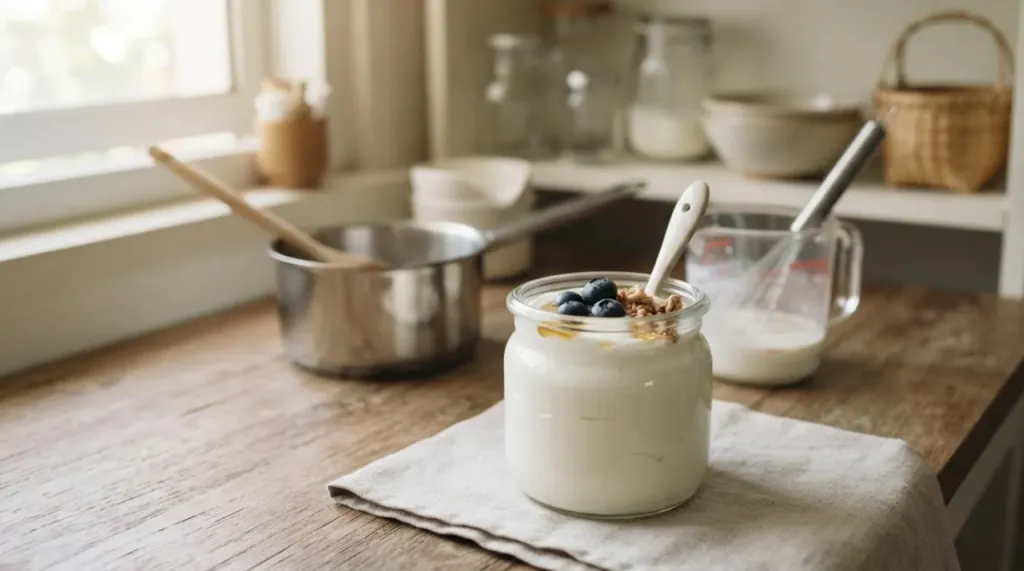
Making your own yogurt can be a fairly simple process. Here is a quick way to make yogurt at home:
Ingredients:
- Fresh milk (500 ml, about 2 cups)
- Plain yogurt with no sweeteners or other additions (2 tablespoons)
- A heat-resistant container with a lid
- Thermometer (optional)
Steps:
- Heat the Milk:
Heat the milk in a pot to about 80 to 85°C (176 to 185°F). Keep stirring so the milk does not scorch. Heat it for a few minutes and make sure it reaches a temperature high enough to kill any bacteria in the milk (what Indonesian cooks call "panas kuku," or nail-hot). - Let the Milk Cool:
Let the milk cool to about 40 to 45°C (104 to 113°F). This matters because this temperature is ideal for yogurt bacteria to grow. - Add the Yogurt Starter:
Mix the plain yogurt with no sweeteners or other additions into the cooled milk. Make sure it is spread evenly through the milk. You can use plain yogurt as your yogurt starter. - Ferment:
Close the container tightly and put it somewhere warm, such as an oven that is turned off or any other spot that holds a temperature of about 40 to 45°C throughout fermentation. Leave it for 6 to 12 hours. You can adjust the fermentation time to your liking: the longer it ferments, the thicker and tangier the yogurt gets. - Check the Consistency:
When the fermentation time is up, check your yogurt. If it has reached the consistency and flavor you want, move the container to the refrigerator to stop fermentation. - Serve:
Once chilled, the yogurt is ready to serve. You can add fruit, honey or granola to taste.
Remember that making yogurt takes time and attention to temperature. Keep your tools clean and always use fresh ingredients. Good luck!
Things to Avoid When Making Yogurt
When making yogurt, a few things are best avoided so that the result stays high quality and safe to eat. Here are some things not to do:
- Using Expired Milk:
Make sure the milk is still fresh and has not passed its expiration date. Expired milk can produce yogurt that is not healthy. - Using Unclean Tools and Containers:
Make sure all equipment and containers are clean and sterile. Cleanliness is a key factor in making yogurt, because it prevents unwanted bacteria from growing. - Using a Starter That Is Not Fresh:
Make sure the plain yogurt you use as a starter is still fresh and not expired. A starter that is less fresh can produce poor yogurt. - Not Checking the Temperature Properly:
The right fermentation temperature is critical for yogurt bacteria to grow. Make sure the temperature of the room or oven where you ferment matches the recommended guidance. - Using Metal Utensils During Fermentation:
Avoid metal tools during fermentation, because they can react with the acid produced by the yogurt bacteria. It is better to use utensils made of non-reactive materials, such as plastic or glass. - Disturbing the Fermentation:
After mixing the starter into the milk, avoid opening the lid or otherwise disturbing the fermentation. Let the bacteria work undisturbed to produce good yogurt. - Not Watching the Fermentation Time:
Do not ignore the recommended fermentation time. Fermenting for too long or too short a time can affect the yogurt's texture and taste.
By keeping these points in mind, you can improve your chances of making delicious, healthy yogurt at home.