How Rebar Is Made: The Step-by-Step Manufacturing Process
How rebar is made, from mining iron ore and smelting to rolling, ribbing, cooling and quality testing, plus the main benefits of rebar in construction.

Rebar (reinforcing steel bar) is one of the construction materials most often used to build structures. It is known for the strength to carry loads and keep every kind of construction stable, from family homes to skyscrapers. One important part of project planning is knowing the rebar weight so you can work out material needs accurately.
1. Mining and Processing the Raw Material
Rebar starts as iron ore taken from a mine. Mining means digging iron ore deposits out of the ground. Once mined, the ore is sent to a processing plant for further work. The collected ore is purified to remove unwanted elements such as sand, clay, and other material.
2. Smelting the Iron Ore
After purification, the iron ore goes into a blast furnace together with coke and limestone. Coke is the fuel that helps melt the ore, while limestone acts as a flux that binds impurities and forms slag. Smelting produces molten iron with a high carbon content.
3. Converting Molten Iron Into Steel
The molten iron from the blast furnace still has a fairly high carbon content. To be used as the base material for rebar, it has to be converted into steel. This happens in a converter or an electric furnace, where the carbon content is reduced to the desired level. The process also allows other elements, such as manganese, chromium, or nickel, to be added to improve the steel's mechanical properties.
4. Forming the Rebar Bars
Once molten steel with the right composition is ready, it is cast into billets or slabs. The steel billets are then reheated before they enter the rolling mill, where they are rolled into bars of a specific diameter. Rolling is done in several stages to keep the size and shape of the rebar precise.
5. Adding the Rib Pattern and Cooling
Rebar generally comes in two types: plain and deformed (ribbed). For deformed rebar, after rolling, the bar is given a rib pattern that helps the concrete grip the steel better when it is used in construction. Once the pattern is formed, the rebar is cooled with high-pressure water to give it a stronger crystal structure.
6. Testing and Quality Control
Before it goes to market, rebar has to pass a series of strict quality tests. The parameters tested include:
- Tensile Strength: Measures how much load the rebar can hold before it breaks.
- Elongation: Shows how elastic the rebar is and how much it can deform before it reaches its breaking point.
- Carbon Content: Confirms that the rebar's composition meets industry standards.
Test data is compared against the applicable standards, such as the Indonesian National Standard (SNI) or other international standards, to make sure the rebar is safe to use in construction projects.
7. Distribution and Use
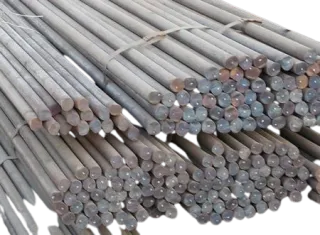
After passing the quality tests, rebar is ready to ship to construction projects. It is bundled as long bars and is typically sold in a range of sizes and diameters to suit construction needs.
Benefits of Rebar in Construction
- High Strength: Highly resistant to compression and tension.
- Durable: Doesn't deform easily and resists harsh environmental conditions.
- Flexible in Application: Can be used in many types of structures, in both small and large projects.
This long manufacturing process ensures the finished rebar is of good enough quality for a wide range of construction projects. If you need high-quality rebar for your project, contact Sinar Jaya Steelindo for the best products at competitive prices.